Group life coaching works because it pairs connection with a teachable structure. Over 25 years, Pam Willsey developed a psycho-educational group model, built on the principle of connection before content, that helps teen girls develop social-emotional skills and lasting peer bonds. The model is now available to other therapists and coaches who want a proven framework rather than building one from scratch.
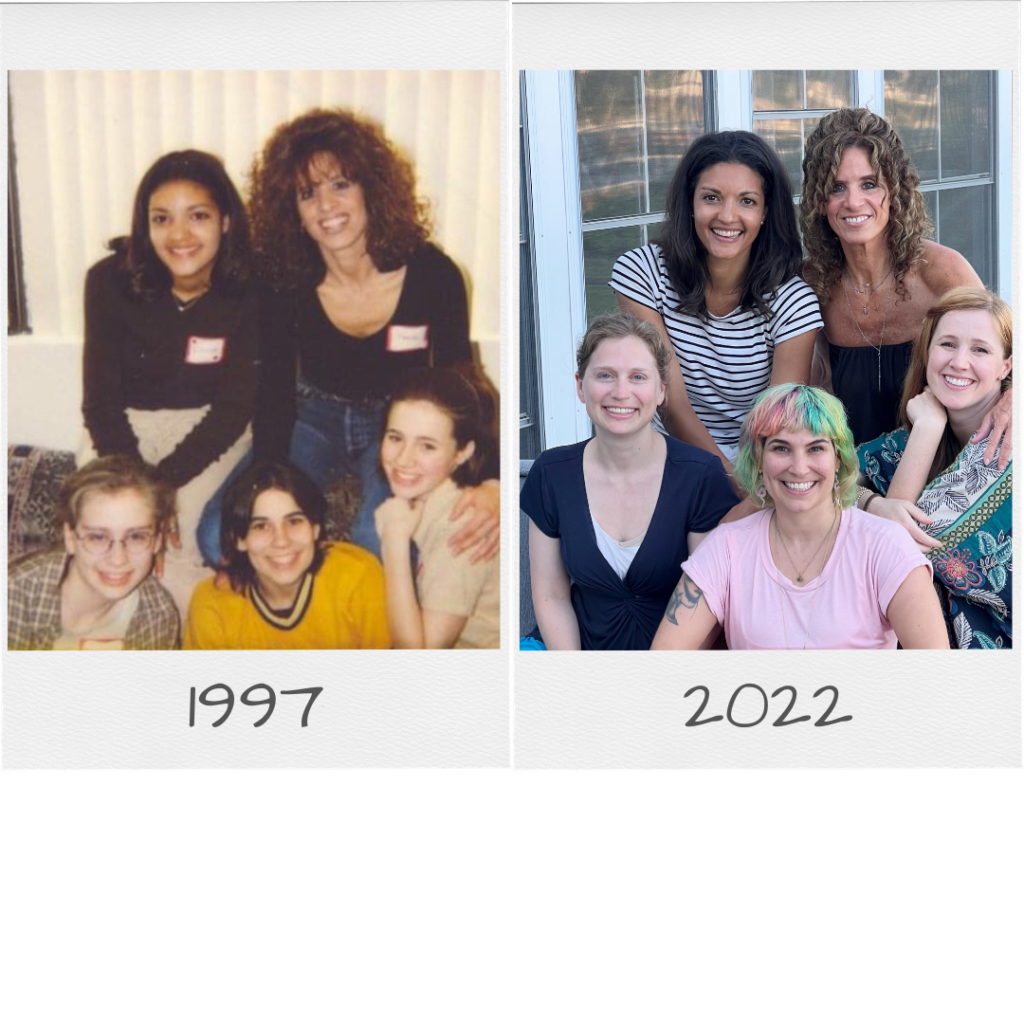
Earlier this summer, several women reunited for the first time in six years. These women came from all different states with only one shared bond – they were participants in my inaugural girls’ coaching group. Over twenty five years ago I chose to create a very special group for teens who had a parent with cancer. This group became the impetus for my decision to create Willsey Connections, life coaching girls and young women. Now women in their thirties, they have blossomed into incredibly successful and independent entrepreneurs, leaders, health care workers, and thriving adults.
We reconvened the original group and I was so excited to be a part of how this shared bond of a sisterhood of connection hasn’t skipped a beat. I was awestruck by the incredible bond and connection that has remained throughout all of the years, life changes, and geographical distance between these now young women. Their journeys have been quite different, and although they have all evolved as humans since they were in the teen group many years ago, the connection that they developed and have nurtured in our group has remained constant. They embraced each other and picked up where we left off a few years ago, despite being apart for so long. They’re different humans than they were in group – time and maturity have created unique paths for each of them. But the connection they developed and nurtured in our group has stayed constant.
Where the model came from
What I have learned since that very first teen group has stayed with me. The right group can offer a safe space where we can share, listen, learn, teach, and solidify the connections that matter most. The ideal group atmosphere allows us to be open to change and growth, both independently and together.
Group settings come in all forms – camps, sports teams, or religiously affiliated settings. Our girls’ groups at WC are similar but slightly different, as we offer an important psychoeducational aspect that includes teaching social, emotional skills. Our participants come as they are and grow together.
The framework: connection before content
The sequence: establish safety and belonging, surface limiting beliefs, build skills, practice in the group, return and reinforce.
Why do connections matter anyway?
Developing a deep connection to ourselves and others in our world is the foundation that gives our life meaning and purpose. Learning how to both build and strengthen these connections at a young age can change the course of our life. Doing self-work in a group setting expedites discovering what our limiting beliefs are, and how these beliefs may be underneath behavioral patterns that keep us from living a life that is in alignment with our most authentic self. Structured in a strategic way that creates connection before content, participants immediately feel welcome and safe to come as they are, feel whatever they feel, and share in ways that are often both vulnerable and growth enhancing.
Not unlike camps or sports teams, our girls groups are on-going and not time limited. Groups offer girls and young women a place to come back to, which ultimately helps them stay the course. Each stage of development has its challenges. In group, the girls learn how to navigate their challenges. When kids, teens and emerging adults discover who they are and what matters most to them and why, it enables them to also discover what is theirs to do with their life. Individually, they are each a thread with their own unique color or material makeup. As a group, those individual threads are woven together, creating a strong, comfy blanket of knowledge and support that the girls can come back to again and again.
Why this model is worth adopting
The original girls group, now grown women, have become that comfy, familiar blanket for themselves. It’s a group that continues to support and provides comfort even after so many years. Our in-person visits may be stretched out over time, but the time we spent twenty years ago and the time we invest now via Zoom, FaceTime, and our regular group chats sustain and assure that our bond is just as strong as ever.
These connections are why I continue to offer group coaching in addition to individual sessions. There are many groups available both in person and virtually, and my hope is that you will find your own blanket of connections that will provide you the strength, consistency, and safety you didn’t know you needed.
For clinicians and coaches, a group format multiplies impact, and a psycho-educational structure gives sessions a repeatable backbone instead of relying on improvisation. If you would like to bring this model into your own practice, learn more about Facilitator Access.
Consider using this time to get really curious about who you want to be right now and what is yours to do. Remain curious about any feelings that arise during these uncertain times. Now is the perfect time to work with a life coach who can help you strengthen the connections to yourself and others in your world. If you know a teen or a college-aged young woman who could use some guidance and support, visit my website WillseyConnections.com for more information and let’s connect.
A group that combines emotional support with explicit teaching of social and emotional skills, so participants leave with usable tools.
Yes. Therapists and coaches can get in touch with Pam Willsey about bringing this model into their own practice. Start on the Facilitator Access page.
The difference is structure: connection before content, a defined skill sequence, and an ongoing, not time-limited, format.
As posted on Psychology Today.